







Skip to content

Ask about anyone in the family. Every answer says where it came from.

Alo
A red-haired woman laughs while cooking beside her gray-haired mother at a home kitchen counterNewLifelong 2.0 is hereSee what’s newLifelong 2.0 is hereSee what’s new

For the one keeping track of Mom.

Lifelong is the AI that takes care of your family. Her records, medicines and appointments, kept together, with Alo to answer questions about them.

Get LifelongSee how it works

What changed after Mom’s appointment?

Alo · Read 1 document

Her levothyroxine went from 50 to 75 micrograms a day, starting May 7.

Discharge summary · May 7

Nobody tells you that someone becomes the family’s memory.Mom saw her doctor on Tuesday. Her dose went up on Thursday. The letter is in a drawer, and your brother still doesn’t know.Lifelong keeps it with Mom’s record, for whoever you share it with.

The dose changed. Do you know why?

After an appointment, the reason sits in a discharge summary, the instructions in someone’s notes and the questions in the family chat. Lifelong keeps them together, with the person they belong to.

  • Every medicine keeps its history.

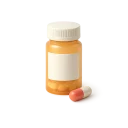
    When Mom’s dose changes, the old one stays on record beside the new one, with the date it changed. Add a medicine by searching for it or scanning the box.

    How Lifelong works
    Close-up of hands taking a pink tablet from a mint-green weekly pill organizer
  • Answers that name their source.

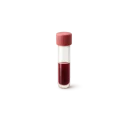
    Ask about Mom’s blood test and Alo answers from the records you keep in Lifelong. It tells you which report it read, and its date.

    Meet Alo
    A woman in a white dupatta stirs a pot on the stove in a bright modern kitchen
    Alo · Read 1 document

    Her latest is the blood report from May 6. Her TSH was 12.4, above the lab’s range.

    Blood report · May 6
  • Ready for the next appointment.

    Dad’s conditions, medicines, allergies and an emergency contact on one Health Passport. Show it at the front desk, or share it as a PDF.

    See the Health Passport
    Cardiology follow-up Jan 21

You shouldn’t have to remember it all.

Lifelong, the family health app for iPhone, reads the discharge summary, lifts out what changed, and keeps it with the page it came from.

How it works

Add it. Photograph the discharge summary or save the file. Lifelong lifts out what changed.

Yasmin's discharge summary from Westside General Hospital, 7 May 2026. Reason for admission: fatigue assessment. Known hypothyroidism, ongoing fatigue reviewed. Levothyroxine changed to 75 micrograms once daily, previously 50 micrograms. Follow-up: GP review and repeat thyroid function tests in 6 to 8 weeks.

Alo reads the record before it answers.

Ask about Mom’s blood test or Dad’s cholesterol. Alo answers from the records your family keeps, and names the document and date behind each part of the answer.

Seen from behind, a gray-haired man holds up a phone at a colorful family gathering

How has Dad been this week?

Your morning reviewLast night
7h 42m
32m more than your usual
usual 7h 10m
Alerts 1 of 5

Your morning review: last night, 7 hours 42 minutes of sleep, 32 minutes more than your usual of 7 hours 10.

Names the document and the date.

Each number comes with the record it was read from. Her thyroid results say which blood report and which day, so you can check the original.

Yasmin (Mom)Yasmin · Mom

You ask Alo: When was Mom’s last blood test? She’s been getting out for walks more lately.

Alo: Read her blood test and discharge summary.

The latest blood test I have for Yasmin is from May 6, about six months ago. These two thyroid results were outside the lab’s range:

Thyroid function, Yasmin, blood test of May 6, 2026: TSH 12.4 mIU/L, high (lab range 0.4 to 4); free T4 8.0 pmol/L, low (lab range 10 to 20). Source: blood report, May 6.

I also checked her discharge summary from the next day. It notes ongoing fatigue, an adjustment to her thyroid medicine, and a plan for a primary care review and repeat blood tests.

Shows what changed.

Ask what changed after the hospital. Alo lines up her dose before and after from the discharge summary, and how her walking has picked up since.

Yasmin (Mom)Yasmin · Mom

You ask Alo: What did they change?

Alo: Read her discharge summary, medicines and steps.

Her clinician increased levothyroxine from 50 to 75 micrograms once a day. That change is recorded in the discharge summary.

Levothyroxine, Yasmin’s medicine, tablet once a day. Now 75 micrograms once a day, since May 7, 2026, from her discharge summary. Before, 50 micrograms once a day. Source: discharge summary, May 7.

Over the last four weeks, she’s averaged about 5,400 steps a day, compared with about 2,900 around that visit.

Yasmin’s daily steps, weekly averages since May: 5,410 steps a day over the last 4 weeks, against 2,910 a day around May 6.

Knows the whole family.

Ask about Mom’s thyroid or Grandma’s cholesterol. Alo keeps each person’s records apart and sees only what you can see.

Margaret (Grandma)Margaret · Grandma

You ask Alo: How has Grandma’s cholesterol changed?

Alo: Read three lab reports and her cardiology follow-up.

Her LDL has come down from 162 mg/dL last November to 98 in March and 74 on October 19.

Margaret’s LDL cholesterol: 162 mg/dL on 14 Nov 2025, 98 on 10 Mar 2026, 74 on 19 Oct 2026; her goal is under 70. Sources: lab report, 19 Oct; cardiology follow-up, 22 Oct.

The write-up of her cardiology follow-up on October 22 notes that’s close to her under-70 goal, so atorvastatin stays at 40 mg.

  • Your family’s own records

    Alo answers from what your family keeps in Lifelong, and sees only what you can see.

  • Sources you can check

    Every answer says which record it came from, and when, so you can check it against the original in Records.

  • It remembers

    It keeps context between conversations, so you don’t explain Mom’s thyroid every time.

Works with the health data you already have.

  • Apple Health
  • Apple Watch
  • Oura
  • Garmin
  • Whoop
  • Fitbit
  • Amazfit
  • Polar

From the ones keeping track.

Read their stories
  • “I stopped being the only person who knew what Mom was taking.”
    Priya N. · Columbus, OhioCaring for her mom from across the country
  • “For the first time, my sisters and I heard the same version of the appointment.”
    Marcus T. · Atlanta, GeorgiaCaring for his dad after a stroke
  • “When the doctor asked how often, I had dates instead of a feeling.”
    Elena R. · San Antonio, TexasCaring for her mom, who has early dementia
An older woman in a patterned shawl and glasses laughs as she turns toward a gray-haired woman beside her at a table

Health is better with your people.

Most health apps are made for one person with one condition. Families don’t work like that. We look after each other, and the people around us are part of how we get better. Lifelong is made for the whole family.

Why we build for the family

You decide what your family sees.

Bring a sibling in on Dad’s care without handing over everything, and change what they see at any time.

  • Nothing is shared until you share it.

    Then you set it category by category and person by person.

    Family sharing
  • We never sell health data.

    We don’t share it for advertising, and our AI providers’ contracts forbid training on what we send.

    Privacy policy
  • Encrypted in transit and at rest.

    Only staff who need production data can reach it, and every access is logged.

    Security

It started with our own families.

“He decided the house was the wrong shape, so he changed the shape of the house.”

Razi Syed, co-founder, on his father
About the team
  • Razi Syed, Co-founder & CEO of Lifelong

    Razi Syed

    Co-founder & CEO

    Razi started Lifelong after watching his father tear down the walls of the family home to care for his dying grandfather.

    Razi’s story
  • Param Singh, Co-founder & CTO of Lifelong

    Param Singh

    Co-founder & CTO

    Lifelong began as the shared record Param built of his grandmother’s care in the last year of her life, so his family could prepare for each next step.

    Param’s story

For the organizations families lean on.

We’re starting to work with home-care agencies and assisted-living teams. If you support families, we’d like to talk.

Questions

The short ones are here. For anything else, ask underneath, or read the full FAQ.

What is Lifelong?

Lifelong is a family health app. It keeps one family’s health in one place: medications, symptoms, appointments, records, lab results, and the daily signals from the watches and phones you already use. It lets you share exactly the parts you choose with the people you choose. It reads the documents you upload, builds them into a timeline, and answers questions about them.

How is Lifelong different from Apple Health?

Apple Health collects one person’s health and fitness data on their own iPhone. Lifelong is built around a family: each person has their own space for medications, conditions, symptoms, appointments and records, and chooses what the rest of the family can see. The two work together. With your permission, Lifelong reads sleep, activity and heart rate from Apple Health. What Lifelong adds is the paperwork Apple Health doesn’t hold, such as discharge summaries, lab reports and what was said at an appointment, and Alo, an assistant that answers questions using what your family has chosen to keep there.

What can my family actually see?

Only what you have chosen to share with them. When you join a family, the app asks you to choose, per category, what your family can see:

  • Daily signals: sleep, activity, heart
  • Health records and documents
  • Medications, conditions, symptoms and appointments
  • Journal entries and notes

Nothing of yours is visible to anyone until you have made that choice and confirmed it. We recommend sharing everything, because a family that can see the whole picture is the point of the product. It is a recommendation, not a default that happens to you. You can narrow, widen or revoke at any time, per category and per person, and revocation takes effect immediately.

What is Alo?

Alo is the AI in Lifelong. It answers from what your family keeps there: each person’s records, medicines, conditions and symptoms, and the sleep, activity and heart rate that come in through Apple Health. It names the record and date behind record-based answers, keeps context between conversations, and drafts entries for you to confirm. It doesn’t browse the web, and it sees only what you can see. You talk to it in the iPhone app. There is more on the Alo page.

Do you sell my health data?

No. Not to advertisers, not to data brokers, not to insurers, not to anyone. We do not sell your health data or use it for advertising.

Separately, if you allow Apple’s tracking permission, the production iOS app uses Meta and RevenueCat to measure installs, app opens, trials and subscriptions from our advertising. That can share device and advertising identifiers and subscription events, but not your health records or Alo conversations. You can decline tracking and still use Lifelong. See Privacy Policy §4.7 for the data involved and how to change your choice.

Is Lifelong on Android or iPad?

Lifelong is on iPhone today and needs iOS 17 or later. An Android version is coming soon, and we plan to bring Lifelong to iPad and the web as well.

Answered by AI from the pages of this site, and it can be wrong. It isn’t medical advice, so please leave personal health details out.

Have the details ready for the next appointment.

Lifelong is on the App Store for iPhone. One membership covers the family.

Get Lifelong