


Lifelong · The Family Health Company · trylifelong.com/press
Press kit
Lifelong, a family health platform, launches on the App Store in the United States and several more countries on 12 August 2026 — one place for a whole household's records, medications, appointments, conditions and daily signals, with an AI assistant that answers questions using the family's complete context.
The release
For immediate release · 12 August 2026
Lifelong launches an AI that holds a whole family's health — betting that healthcare's intelligence is leaving the hospital and coming home
Founded by a health-tech founder whose father tore down the walls of his own house to care for a dying parent, Lifelong is building the intelligence layer for the 63 million families doing medicine's invisible work
12 August 2026 — When Razi Syed's grandfather became too ill to walk, his father took a sledgehammer to a wall in the family home so a hospital bed could fit through the doorway. Then he took down a second wall, in the bathroom, so a wheelchair could reach the bath and he could wash his own father with dignity. He bought the bed himself. He installed the hoist himself. He learned to lift a grown man out of a chair without hurting either of them, and did it every day, for as long as it took.
No system helped him. He decided the house was the wrong shape and changed the shape of the house.
“I have not done one percent of what my father did, and I've been handed a thousand times his tools. That's not a comfortable thing to sit with. It is a very clarifying one.”
— Razi Syed, co-founder and CEO
Today Syed and his co-founders Gurleen Singh and Param Singh launched Lifelong, a family health platform that consolidates every member of a household's medical records, medications, appointments, conditions and daily health signals into a single system, with an AI assistant — Alo — that can answer questions using the family's complete context.
A workforce nobody can see
The company is launching into a demographic shift with no precedent. 1.4 billion people worldwide will be over 60 by 2030, according to the World Health Organization, rising to 2.1 billion by 2050. In the United States, 63 million adults — nearly one in four — now provide ongoing care to a family member, an increase of 20 million in a decade, according to Caregiving in the U.S. 2025 from AARP and the National Alliance for Caregiving. Twenty-nine percent are simultaneously caring for children. Only around one in five of those performing complex medical or nursing tasks have received any training for it.
It is, by volume, the largest workforce in healthcare. It is also almost entirely invisible to the institutions that depend on it.
“Insurers don't model what happens inside a house. Health systems were never built to see it. Regulators haven't written the rules for it. Nobody knows who reminds whom, who drove to the appointment, who noticed first that mum had stopped taking the stairs. We've spent months sitting in living rooms — more than 85 families — because that's where the actual care system is, and nobody was looking at it.”
— Razi Syed
The bet: intelligence leaves the institution
Lifelong's thesis is that healthcare's defining shift over the next decade will be that intelligence moves out of institutions and into the lives of the people health is actually about.
“For a century the hospital was the only place capable of holding what was known about you, so that's where we put it, and we built insurers, regulators and aged care on top of that assumption. That constraint is gone. What's left behind it is a system where the institution has all of the data and twelve minutes a year, and the family has all of the love and nothing else. That's backwards, and it's now fixable.”
— Razi Syed
“It won't be your doctor's health record that knows everything about you. It'll be your own.”
— Gurleen Singh
What Lifelong does
Lifelong brings a family's health into one place:
- Shared health records specialist letters, results, documents and history for every family member, structured so the system understands how they relate
- Medications and conditions what everyone is taking, what was stopped and why, tracked over time
- Appointments what happened, what was said, what's next, and what to ask
- Daily signals sleep, movement and trends from wearables the family already owns
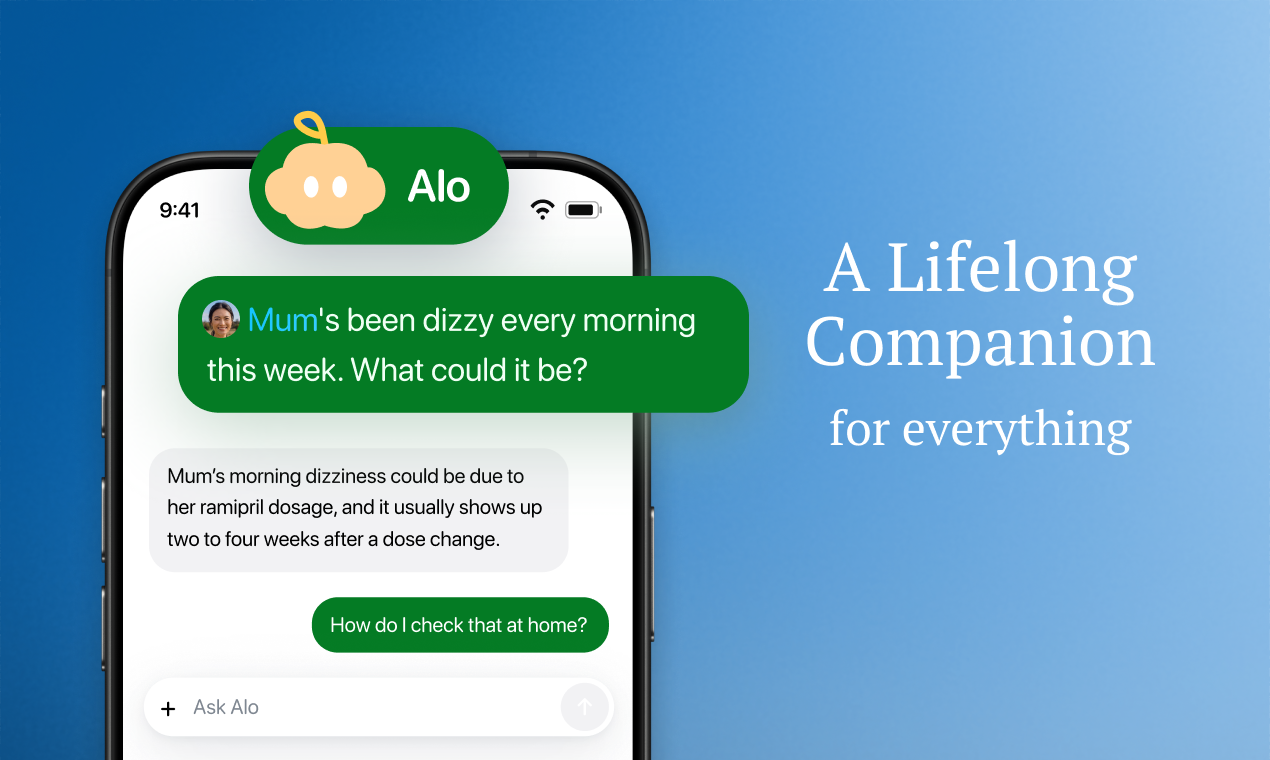
- Alo an AI assistant that answers questions with the family's full context — what the cardiologist actually said, whether a parent is taking what they were prescribed, what has changed since last month
The product is designed to be used by a family together rather than by one person alone — a deliberate departure from a consumer health market built almost entirely around the individual.
“Every health app ever built models an individual, but health doesn't resolve at the individual. It resolves at the household. Shared genetics, shared kitchens, shared stress, shared decisions. The strongest predictor of whether someone takes their medication isn't a reminder — it's whether someone who loves them is paying attention. We built for that unit.”
— Gurleen Singh, co-founder and CPO
“Most health software feels like it was designed by people who have never been frightened. It should feel calm when the news is fine, direct when it isn't, and it should never make you feel surveilled or like you're failing. That's a design problem, not a data problem, and I think it's the whole game in consumer health.”
— Param Singh, co-founder and CTO
Privacy: a family system, not a monitoring system
Lifelong is explicitly positioned as a tool families use together rather than one that monitors an ageing relative on their behalf. Data is user-controlled and permissioned within the family. Lifelong is not a medical device, does not diagnose, and is built with clear boundaries and an explicit escalation path to clinicians.
“A family is not a fleet to be monitored. If a tool makes your mother feel watched, it has already failed, no matter how accurate it is.”
— Param Singh
Traction and availability
Lifelong has been in private use with around 30 families — co-designed with 14 multigenerational households over four months — following more than 85 in-depth family interviews, with several hundred more families on the waitlist. The company is launching in the United States and several more countries.
Lifelong is available on the App Store today. Families get two weeks free, then pay $24.99 per month, or $119.99 per year, for the entire household — a single subscription covering every member, rather than per-person pricing.
“My father moved walls for one man. We intend to move them for millions of families.”
— Razi Syed
###
Sources for the statistics above
- 1.4 billion people worldwide will be over 60 by 2030, rising to 2.1 billion by 2050. World Health Organization
- 63 million US adults — nearly one in four — provide ongoing care to a family member, up 20 million in a decade. 29% also care for children; about one in five doing complex medical or nursing tasks have had any training. AARP and the National Alliance for Caregiving, Caregiving in the U.S. 2025
Fact sheet
- Company
- Lifelong
- What it is
- Family health platform with an AI assistant (“Alo”). Consolidates records, medications, appointments, conditions and wearable signals for an entire household.
- Founded
- 2026
- Founders
- Razi Syed (co-founder & CEO), Gurleen Singh (co-founder & CPO), Param Singh (co-founder & CTO)
- Launch date
- 12 August 2026
- Markets
- The United States and several more countries
- Platform
- iOS (App Store)
- Pricing
- Two-week free trial, then $24.99/month or $119.99/year for the whole family — not per person
- Traction
- ~30 families in private beta · co-designed with 14 multigenerational families over four months · 85+ in-depth family interviews · several hundred families waitlisted
- Regulatory posture
- Not a medical device. Does not diagnose. User-controlled, permissioned data with an explicit clinical escalation path.
- Category
- Consumer health · family care coordination · AI health
Lifelong is available on the App Store from 12 August 2026.
Boilerplate
The company description, to run verbatim.
Lifelong is building the intelligence layer for families. Founded in 2026, Lifelong brings a household's complete health context — records, medications, appointments, conditions and daily signals — into one system, with an AI assistant that helps every family member understand and act on it together. Lifelong is available on the App Store in the United States and several more countries.
Founders
Razi Syed
Co-founder & CEO
Razi Syed is co-founder and CEO of Lifelong. He dropped out of Harvard to found mettleAI, a digital therapeutics company that used wearable data to predict drug relapse and mental-health deterioration, sold into US health systems, and exited in 2021. He then invested in frontier healthtech — neurotech, AI drug discovery, precision medicine — at PsyMed Ventures, before returning to building as Head of Product at Sahha, making wearable data and mental-health predictions available to any developer. He started Lifelong after watching his father tear down the walls of the family home to care for his dying grandfather.
Gurleen Singh
Co-founder & CPO
Gurleen Singh is co-founder and CPO of Lifelong. He left a PhD in computational neuroscience and AI to join Sahha as Head of Research and AI, then led the AI-clinician product at Everlab as the company grew revenue tenfold in eleven months. At Lifelong he works on the intelligence layer and the problem he argues is the real constraint in consumer health AI: assembling structured, longitudinal family context.
Param Singh
Co-founder & CTO
Param Singh is co-founder and CTO of Lifelong. A systems engineer across hardware and software, he spent two years building in regulated health and clinical longevity, including for clinics like Omni in Bali. Lifelong began as the shared record he built of his grandmother's care in the last year of her life, so his family could prepare for each next step.
The three founders have known each other for four to five years. Razi and Gurleen met working together at Sahha; Param and Gurleen are brothers. Each has been the one in the room — the direct origin of the company.
Founder photography is available on request — razi@trylifelong.com.
Quotes
Attributable to Razi Syed, co-founder and CEO, unless a piece needs something else — we'll write you a fresh quote on any angle.
- “It won't be your doctor's health record that knows everything about you. It'll be your own.”
- “The hospital sees you twelve minutes a year and knows everything. Your family sees you every day and knows nothing.”
- “He decided the house was the wrong shape, so he changed the shape of the house.”
- “Two things happened at once. The models got good enough to hold a life's worth of medical context, and the demographic bill came due. Those two curves crossing is the whole opportunity.”
- “Most of the world does not experience health as an individual project. In the families we come from, someone else's health is your health. Every piece of consumer health software ever built quietly assumes otherwise, and it makes the experience lonelier than it needs to be.”
- “There's a generation right now holding a toddler in one arm and a parent's diagnosis in the other, and every tool they've been given assumes they only have one thing to think about.”
- “A family is not a fleet to be monitored.”
- “The enemy isn't disease. It's disorganisation.”
- “Context is the scarce thing now, not intelligence.”
- “Love is the highest-agency force in medicine. The bottleneck was never willingness — it was tooling.”
- “The interfaces will be commoditised. What won't be commoditised is being trusted with your mother's medical history and your father's diagnosis, by an entire family, over years. That's not a feature. That's a relationship.”
- “My father moved walls for one man. We intend to move them for millions of families.”
Questions
Including the ones we'd rather not be asked. Answered here so you don't have to wait on an email.
Is this a medical device?
No. Lifelong does not diagnose, does not prescribe, and is not a substitute for clinical care. It organises information a family already has and helps them understand and act on it — including knowing when to escalate to a clinician. We've been deliberate about that boundary from the first line of code.
So you want people to hand over their family's medical records?
People already hand them over — to portals, to clinics, to insurers, to whichever app was cheapest. The difference is that in Lifelong, the family controls it and can see it. Data is user-controlled and permissioned within the family: a member decides what they share and with whom.
Isn't this surveillance of elderly people?
This is the objection we care most about. Lifelong is built as a system a family uses together, not one an adult child uses to monitor a parent. Parents are participants with their own accounts and their own control, not subjects. If a tool makes your mother feel watched, it's already failed.
What happens when Apple or Google ships this?
Interfaces will get commoditised — we assume that. What doesn't commoditise is being trusted by a whole family with a decade of context, and the network effect of a family all being in one system. Big platforms are also structurally cautious about the sensitive, cross-person, permission-heavy parts of this problem, which is exactly where the value is.
How is this different from other family health apps?
We're not building a monitoring product with hardware attached. We're building the intelligence and context layer — agent-first, designed for families who make health decisions collectively, and built for the cultures where someone else's health is understood to be your health. That's a different product and a different customer.
What does it actually do that a general-purpose chatbot can't?
A general assistant doesn't know your father's last three specialist letters, what he was prescribed and stopped, that his sleep has degraded for eleven straight days, or that your sister is the one who takes him to appointments. A smaller model with that context beats a larger model without it, every time. Assembling and maintaining that context is the product.
Isn't $24.99/month a lot?
It's one subscription for an entire family, not per person. For most households that's four to six people. It's less than a single missed appointment costs in time.
Are you fundraising?
We're focused on launch. We'll have more to say about capital shortly.
What's the business at scale?
Families are the natural unit of health decision-making and the natural place for health context to live. Once a family's context lives with them rather than with an institution, everything downstream — records access, care coordination, aged care, insurance, and eventually the devices and agents that will do physical care work — has to route through a layer that knows and is trusted by that family. That's the layer.
What could go wrong?
The model could be confidently wrong about something that matters. We're conservative about that: Lifelong is built to organise, surface and prompt, not to make clinical calls, and to point at a clinician when a clinician is what's needed.
Assets
Free to use in coverage of Lifelong. No login, no form.
Screenshots, the App Store artwork, the logo pack and a single .zip of all of it: trylifelong.com/press
Screenshots
iPhone, 644×1400. Bare app screens, no marketing overlay — email us for higher resolution or a specific screen.
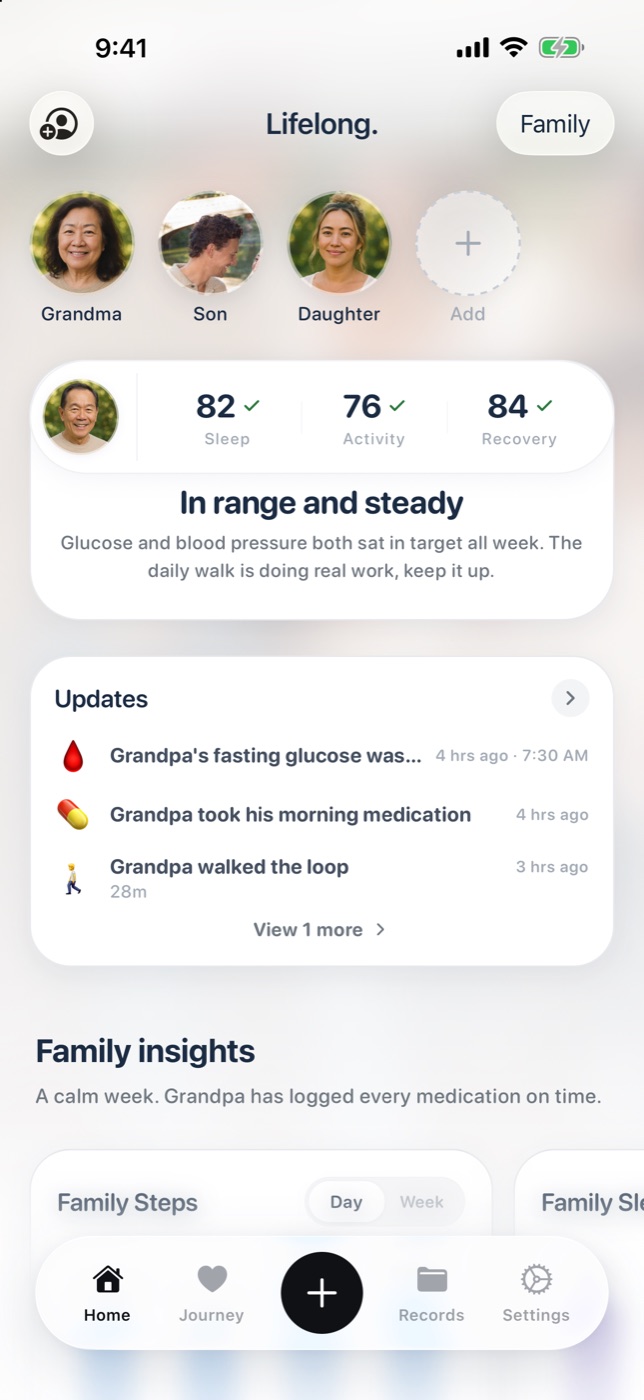 The family's health in one place
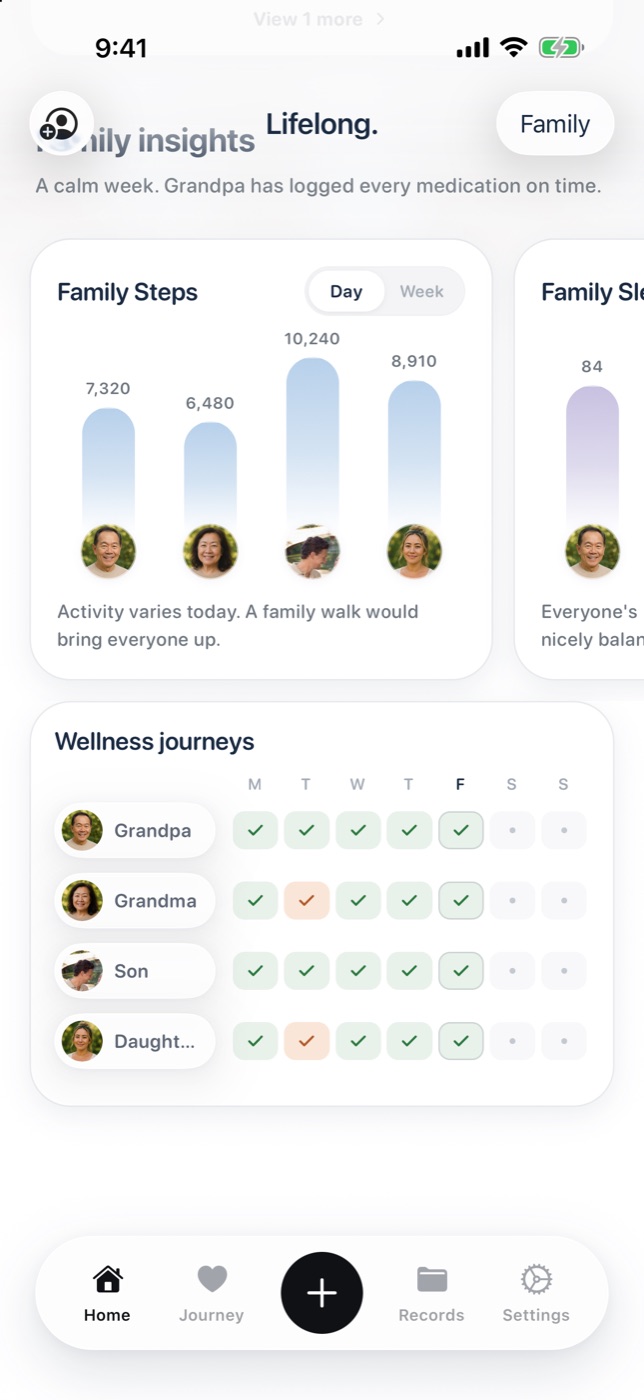 Insights across the household
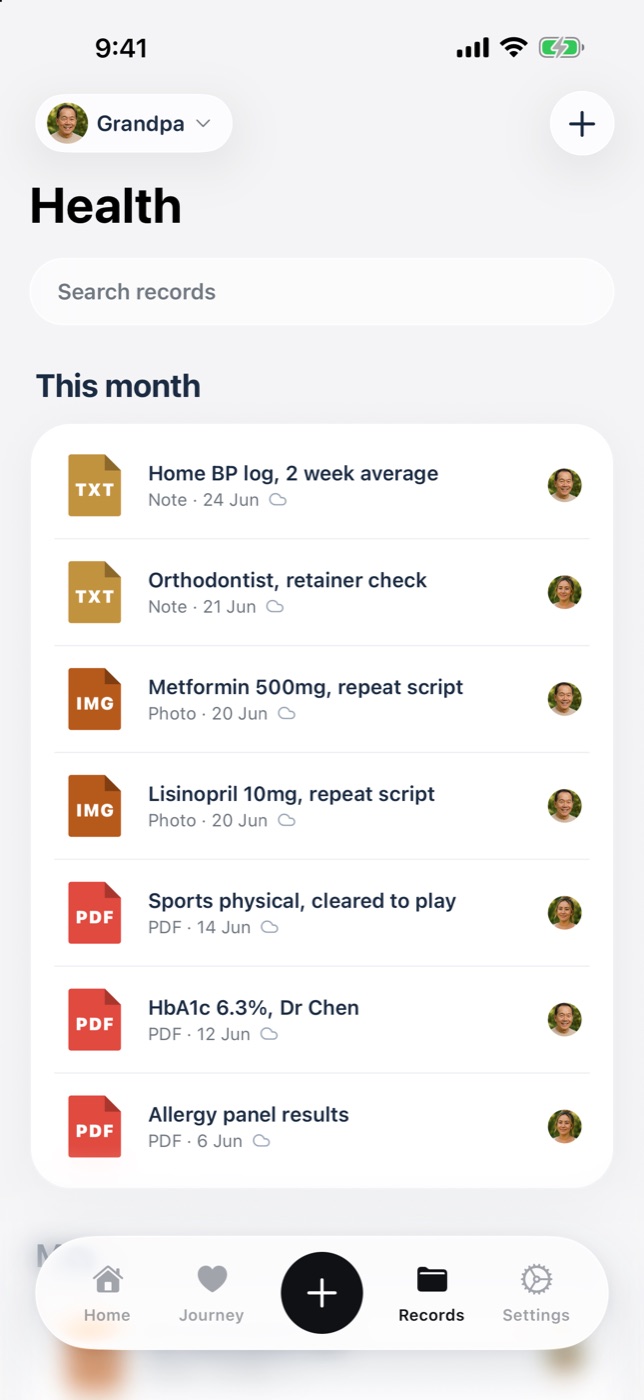 Health records, structured
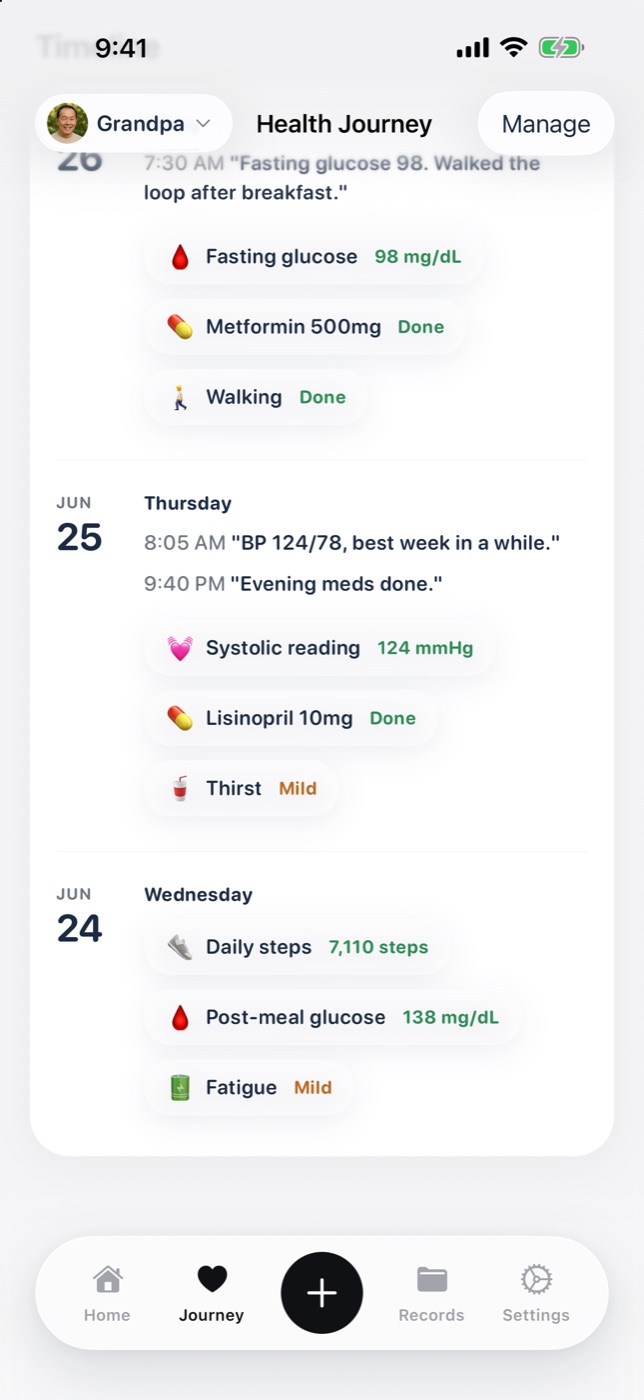 A member's health timeline
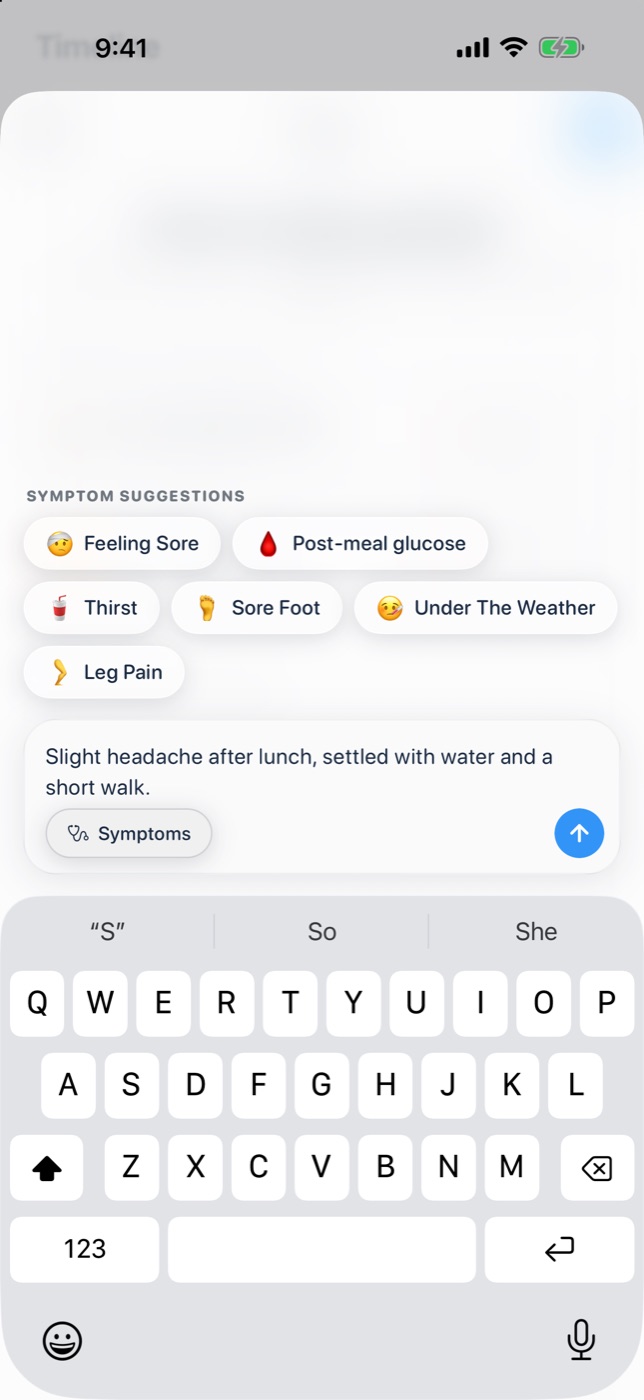 Logging a symptom
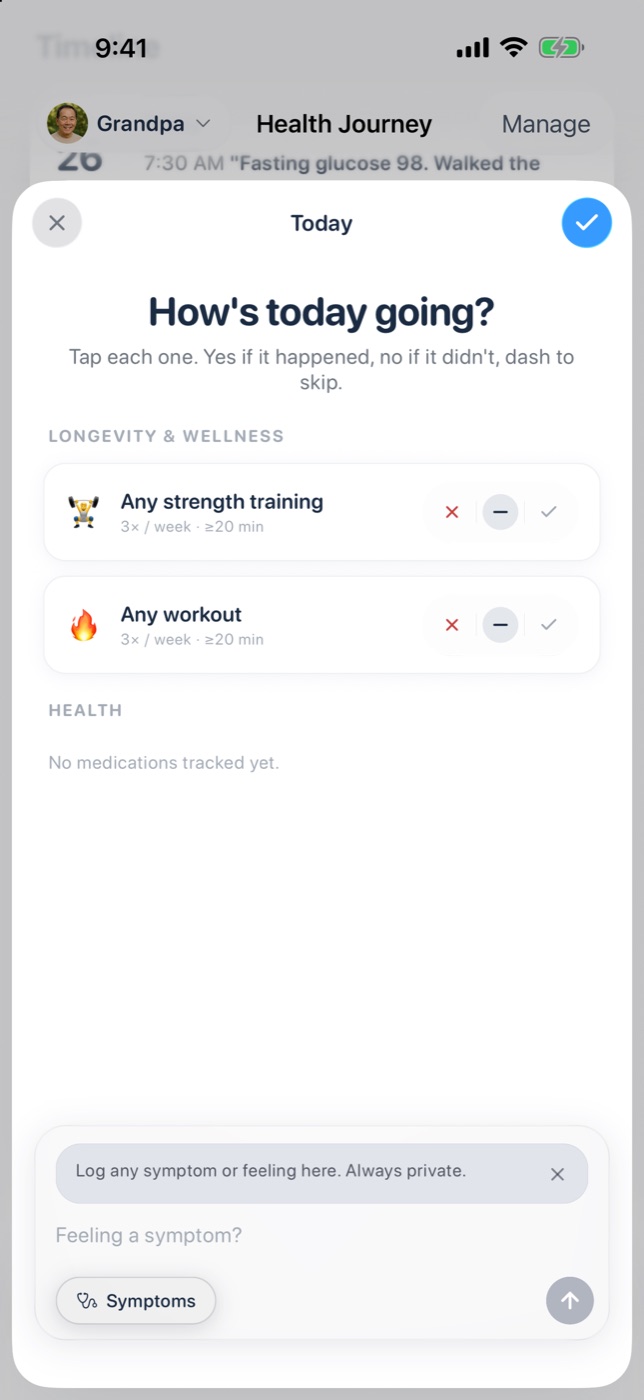 The daily check-in
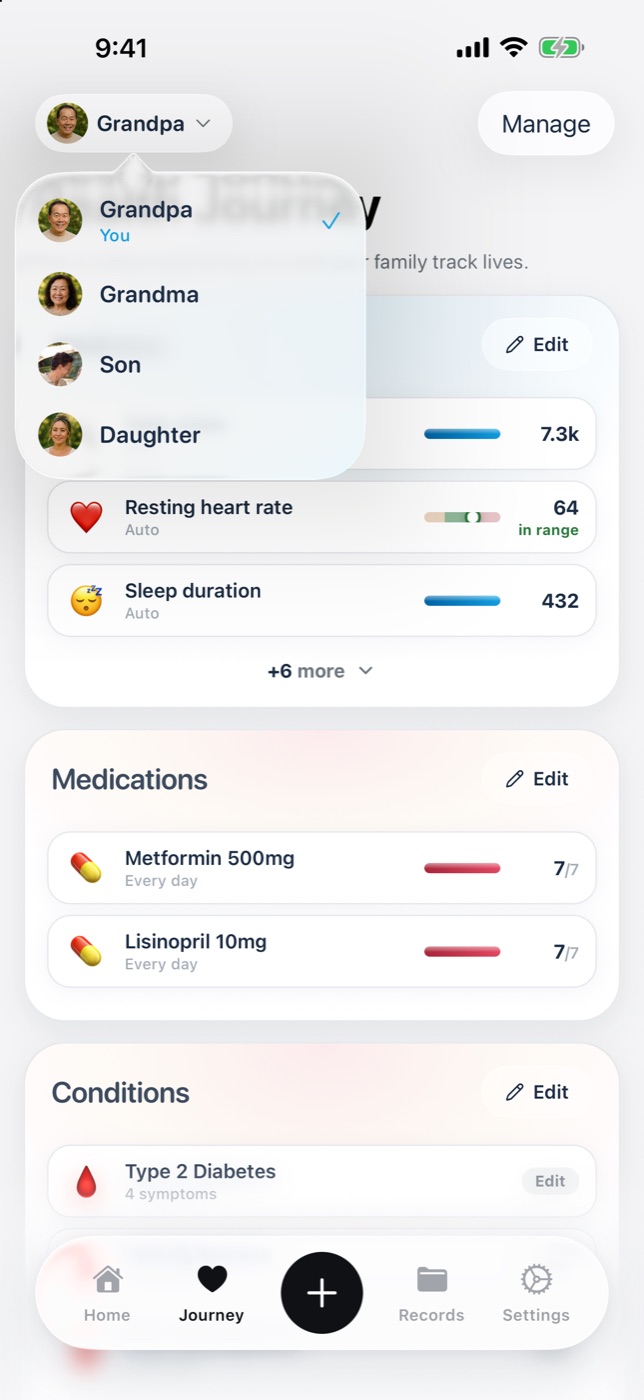 Switching between family members
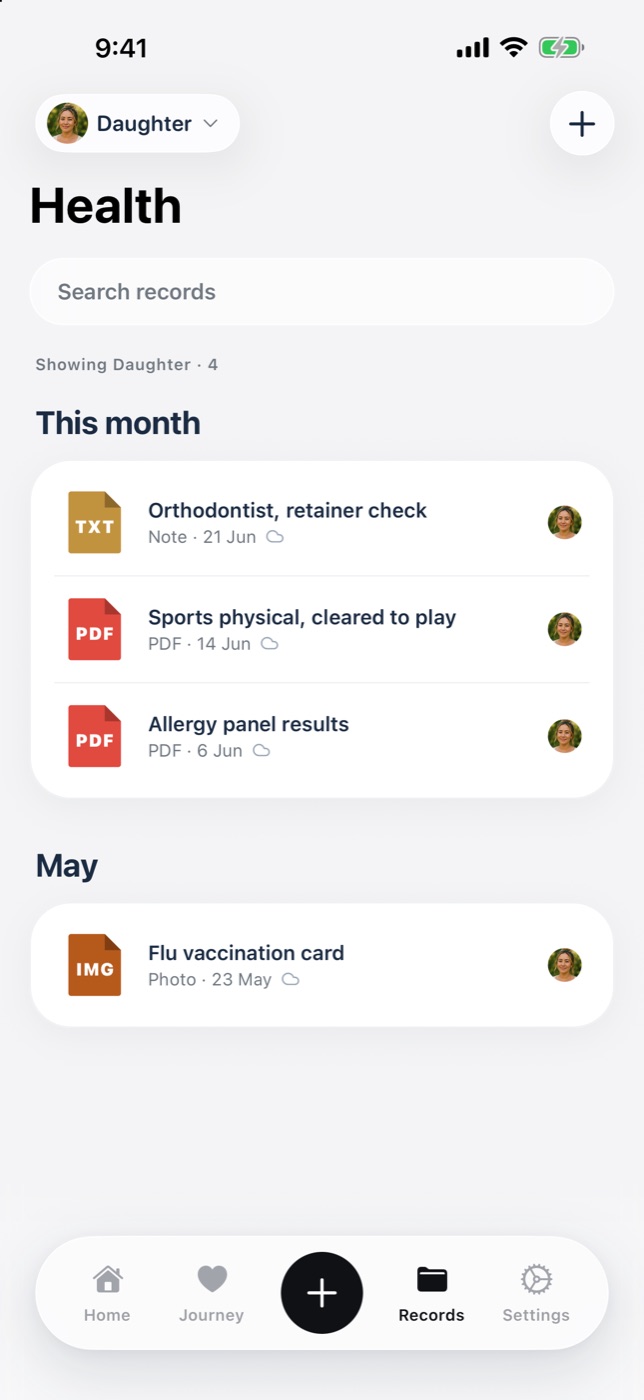 A child's records
Logo pack
App icon and flat mark, PNG. Don't recolour, rotate or add effects; leave clear space of at least half the mark's height on every side.



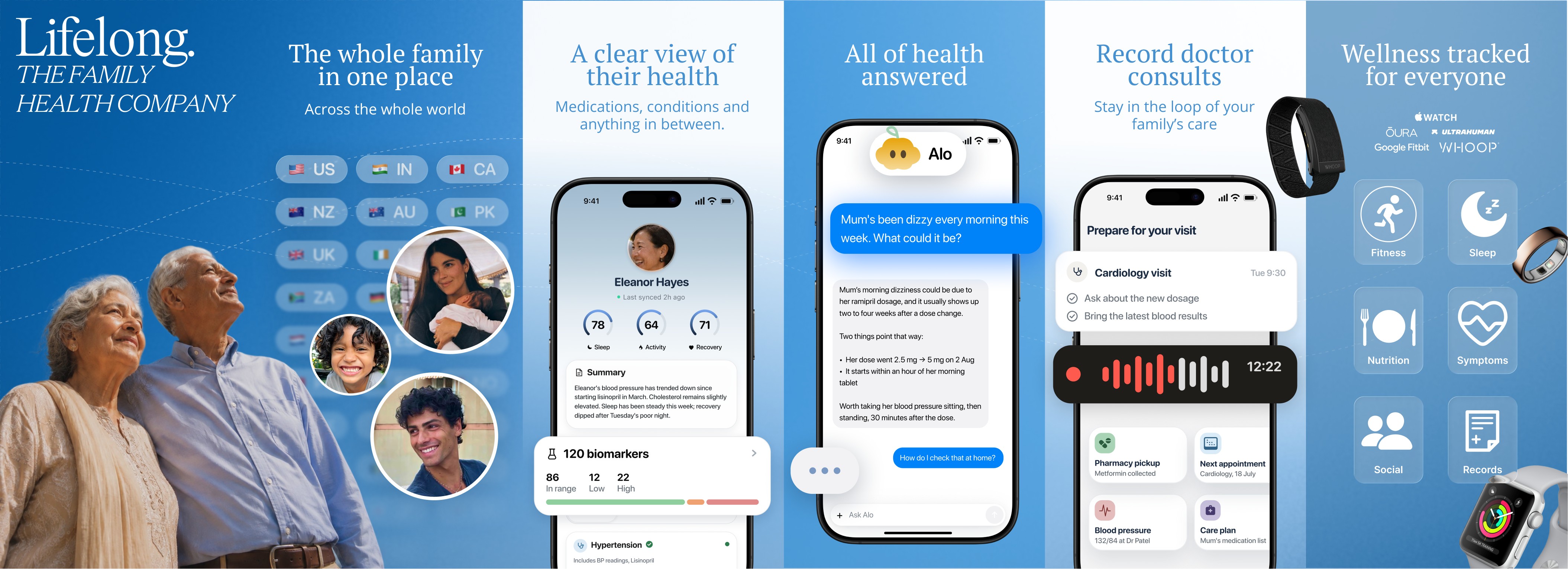
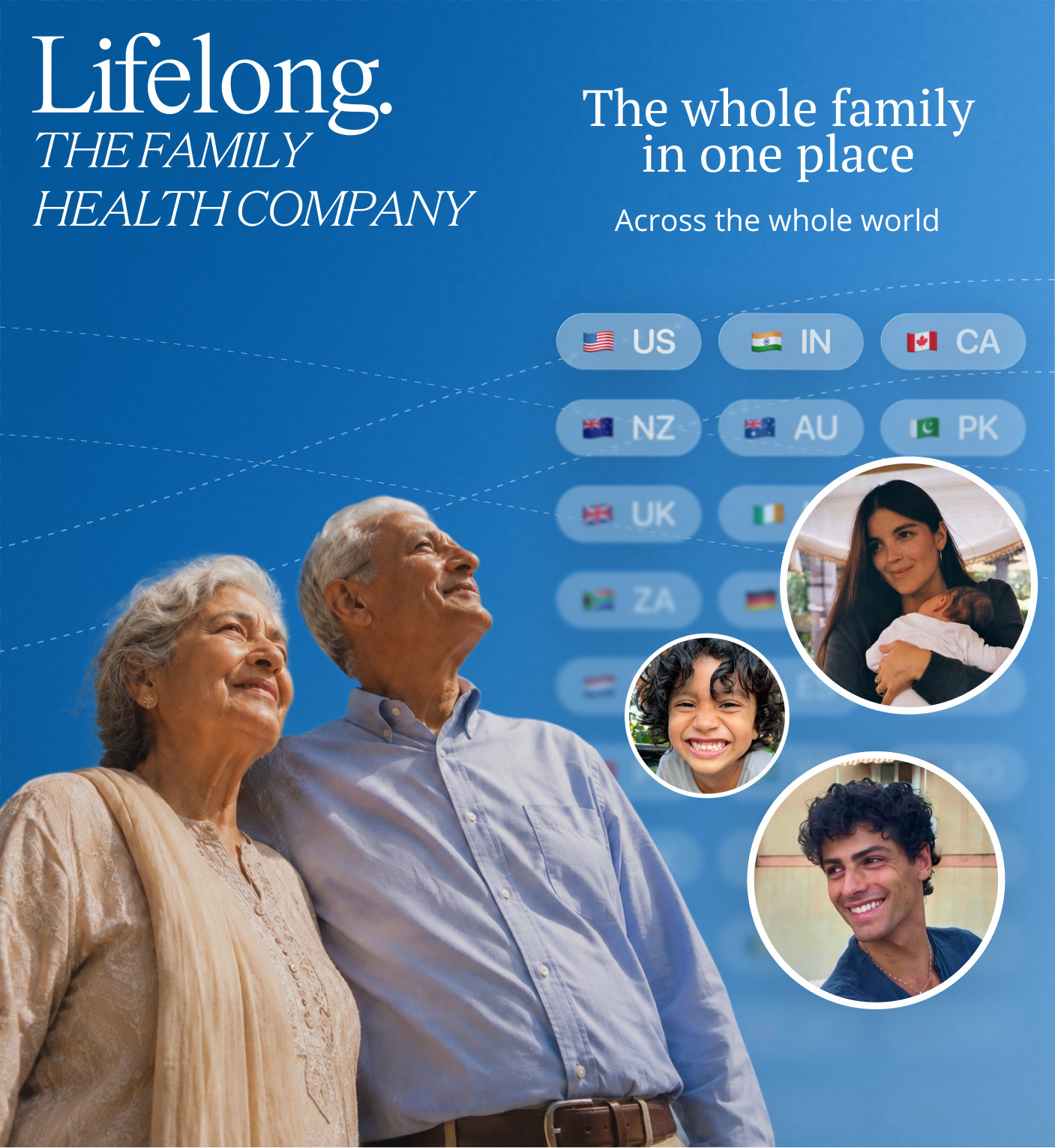
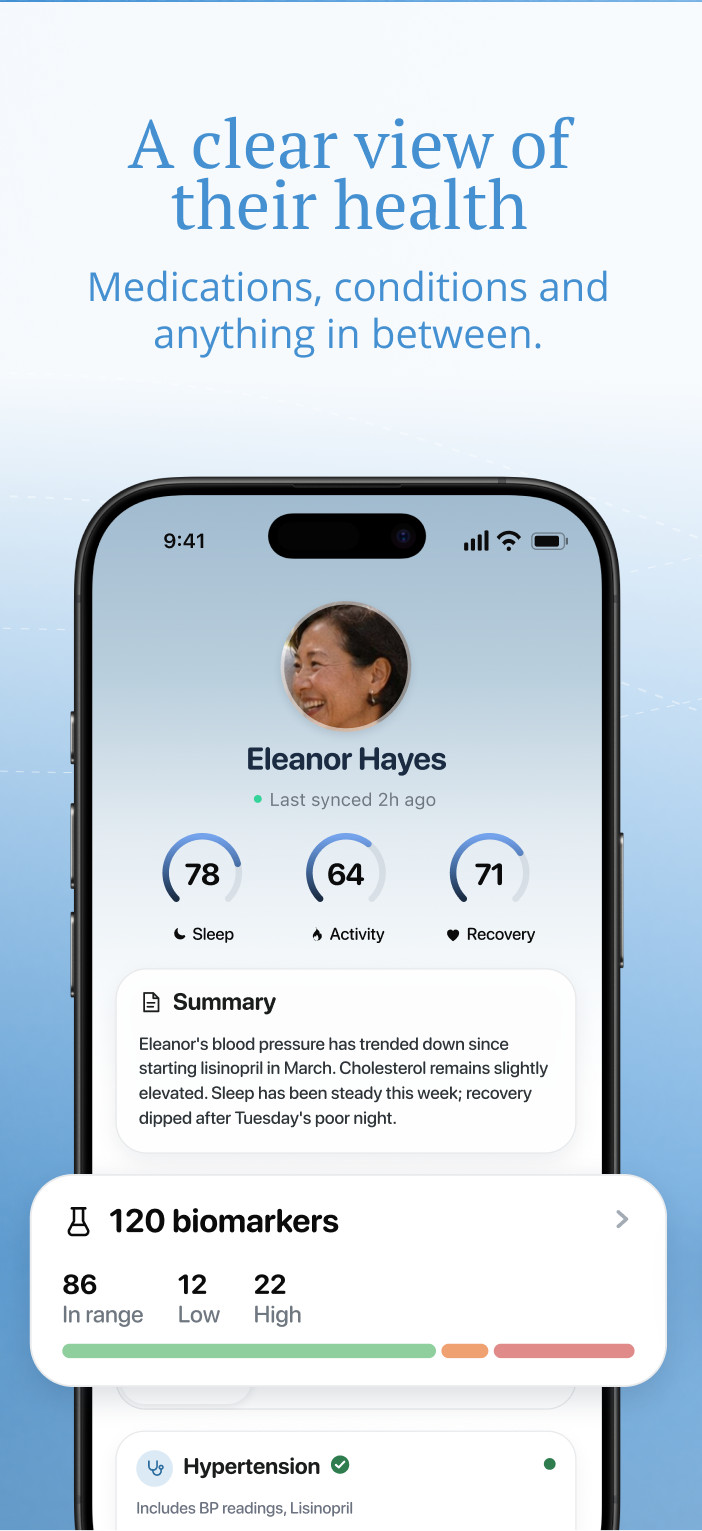
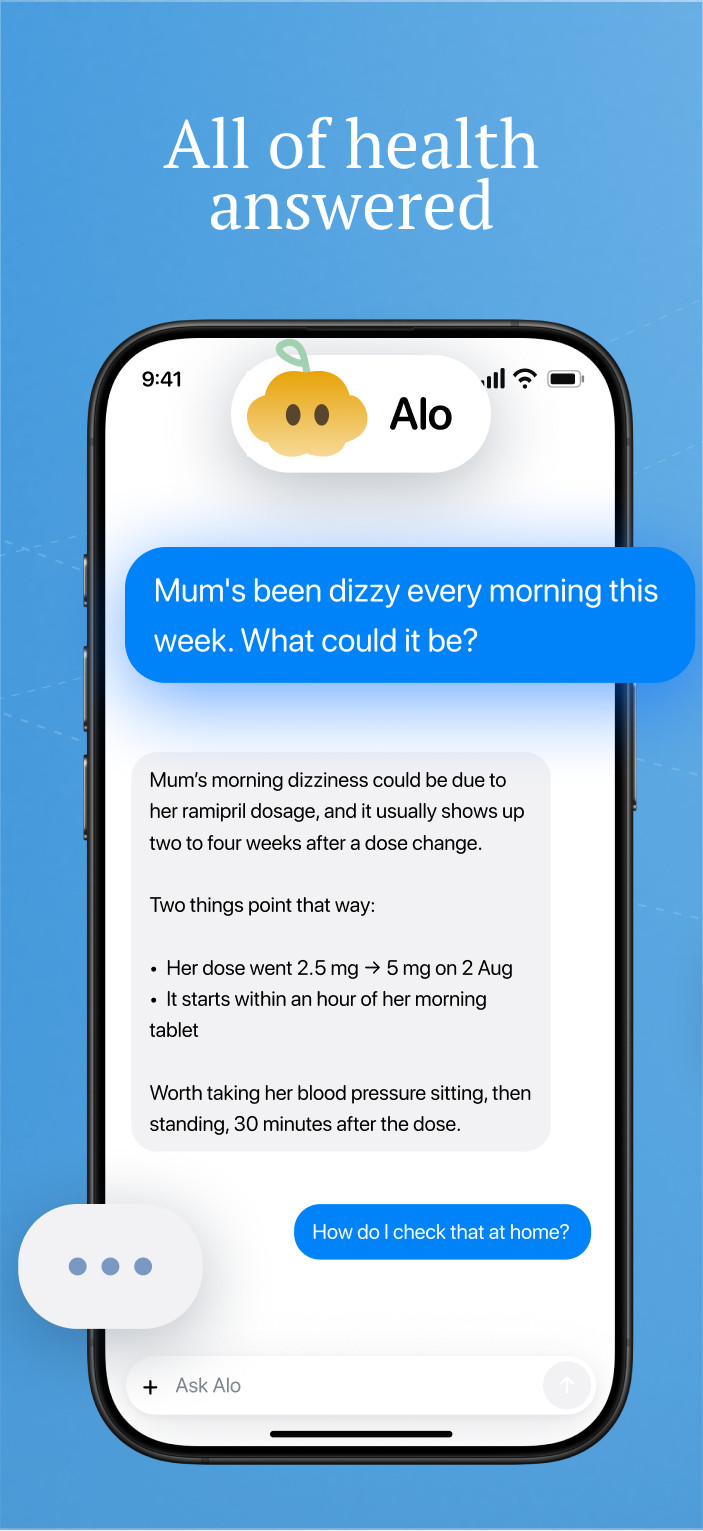
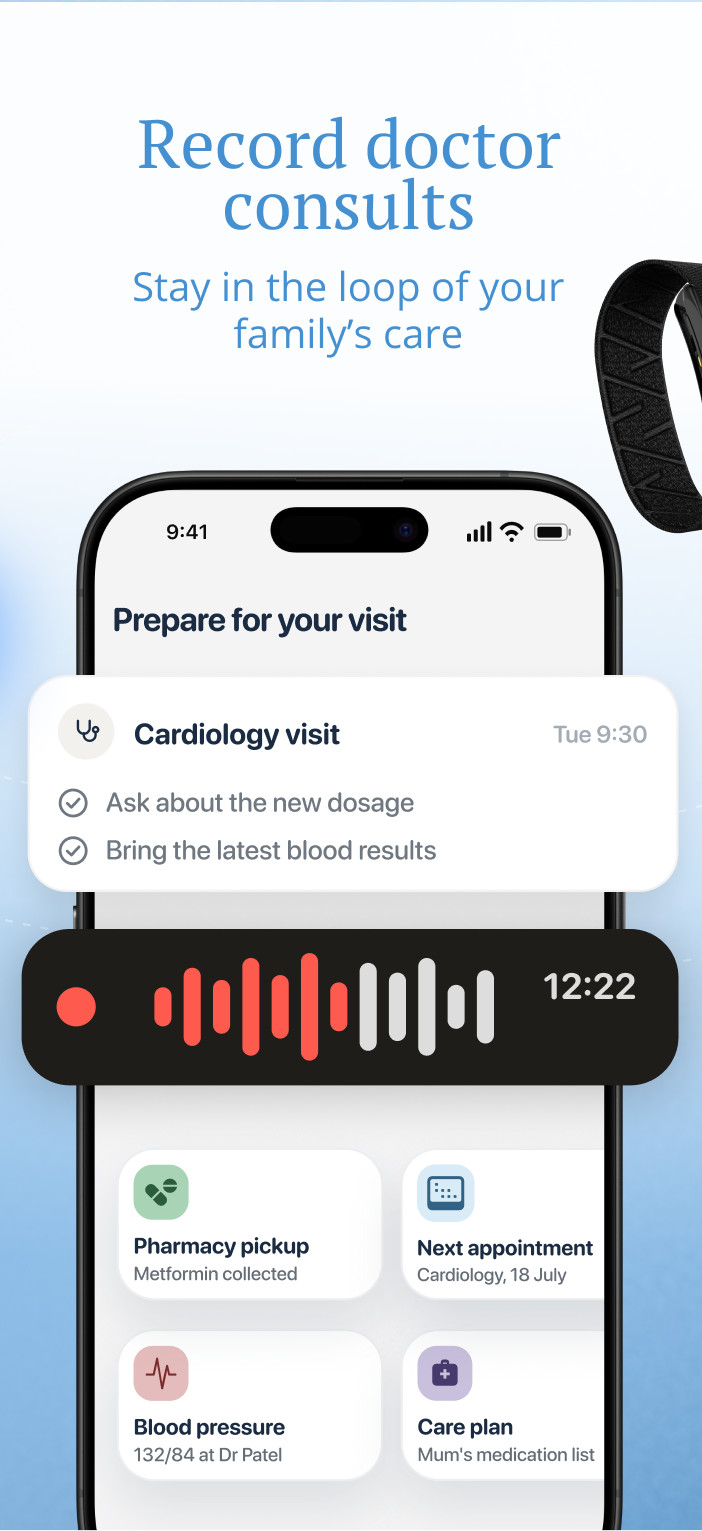
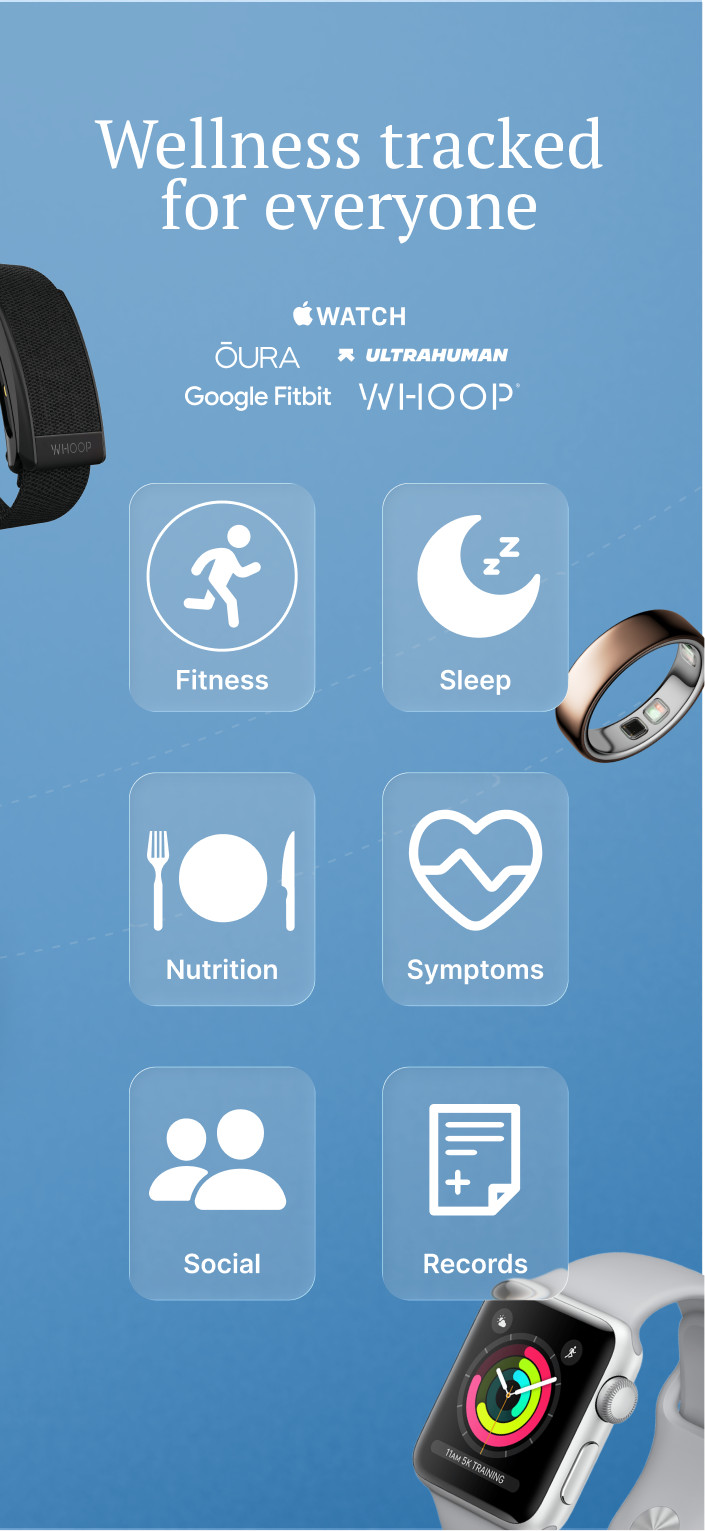
App Store artwork
The marketing images as they appear on the App Store listing — composed shots with headline type over them, not app screens. Use the screenshots above for anything running inside an article.
Social and share cards
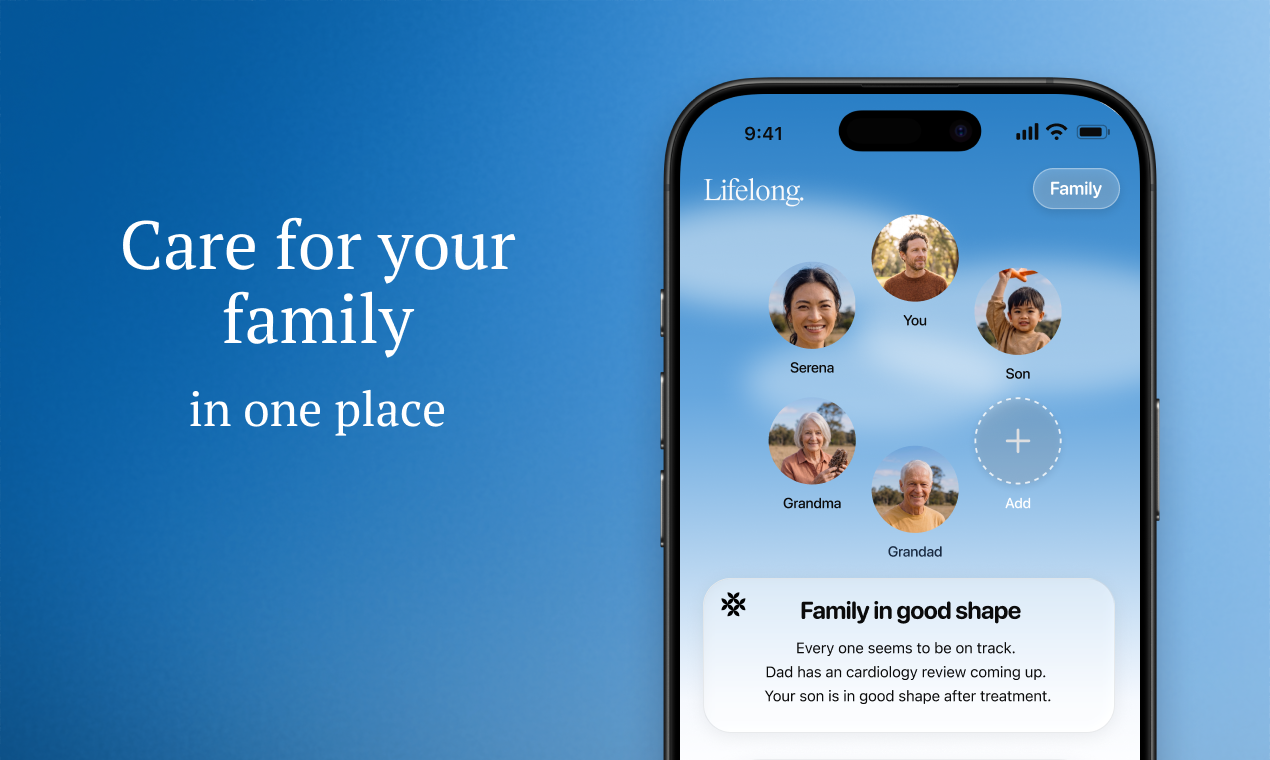
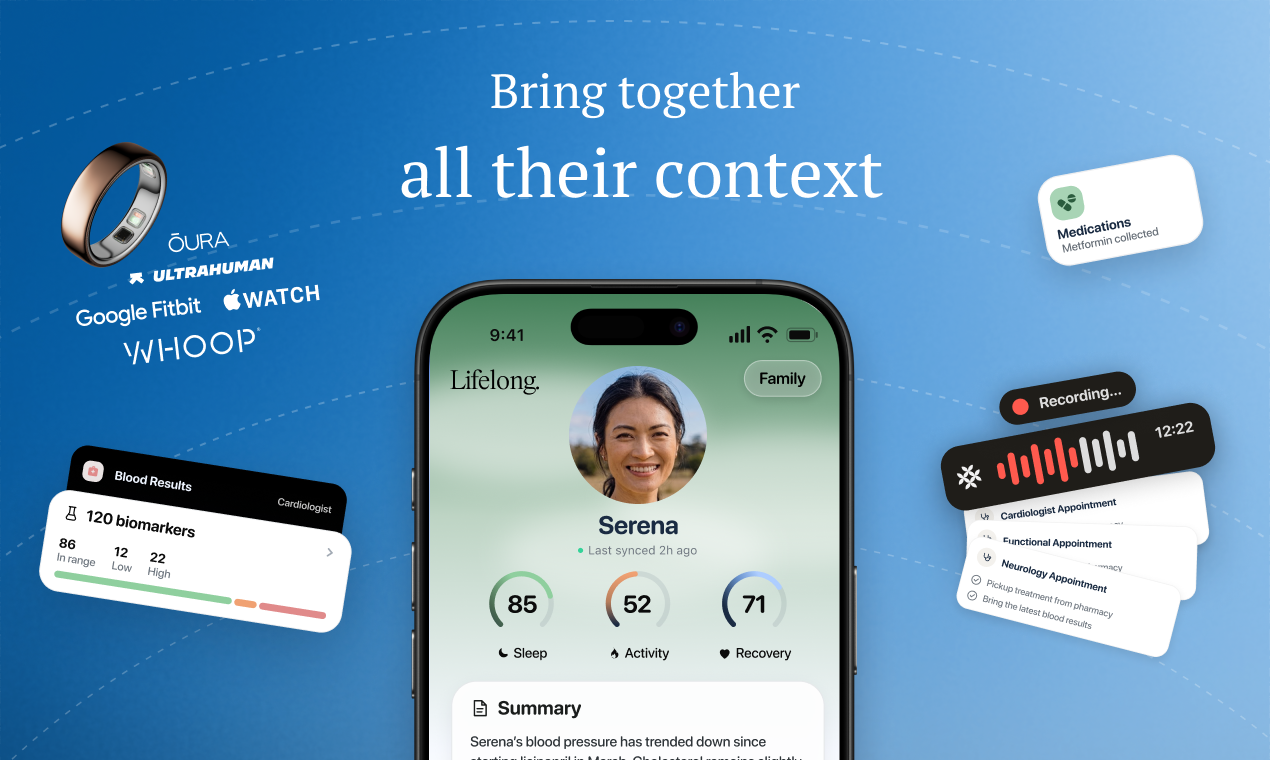
Landscape artwork from our own channels — for a piece that needs one wide image rather than a phone screen. Same usage terms as everything else here.


Contact
Razi Syed, co-founder and CEO.
razi@trylifelong.com
+1 (647) 221-5381 · US & Canada
We can put you in touch with families using Lifelong who will talk candidly about caring for someone, and the founders are available for interview at short notice, remotely in any timezone.