


, 6 min read
How to take care of an aging parent: where to start
The first weeks of caring for a parent: the conversation, permission to speak to their doctors, the papers to gather and who to call.

Co-founder & CEO, Lifelong
The first weeks of looking after a parent are mostly conversations and paperwork: one talk with them, permission to speak to their doctors, a folder of documents, and a short list of people to call. Here they are in order, for families in the United States.
Where do you start when a parent begins to need help?
Start by asking your parent what they want help with, and have that conversation on an ordinary day. The National Institute on Aging (NIA) suggests a meeting or a call with the older person and everyone who will be involved in their care, and says it is most productive when there is not an emergency.
Your parent may not tell you everything. NIA's getting started page says an older person may hold back because they don't want to worry you, or don't want others to know how serious things have become. Explain why you are asking.
Come away knowing three things: what they have been diagnosed with, who treats them, and whether they are willing for you to speak to those people. The last one has paperwork attached.
How do you get permission to talk to a parent's doctor?
A doctor can talk to you about your parent's care once your parent agrees to it. The Department of Health and Human Services (HHS) says a provider can share information with family who are involved in a patient's care if the patient says so or does not object. The simplest version is your parent saying it in the room, with you sitting next to them. The doctor may then discuss what you need to know for your part in their care.
HIPAA does not require that permission in writing. HHS's patient guide says so directly, and adds that a provider "may prefer or require" written permission and may have its own rules for checking who is on the phone. NIA tells caregivers to expect to need written permission unless their parent is with them and able to consent. Plan on a form, and ask each clinic which one it uses.
The written version is called an authorization. HHS describes it as a document that names, among other things, the information to be shared, the person it can be shared with, and an expiration date. Check the expiration date before your parent signs, and put it in a calendar.
A personal representative has more than permission to talk. Under HIPAA, a person who can make health care decisions for your parent under a health care power of attorney is their personal representative, and a provider must generally let that person inspect and receive a copy of the records. HHS notes that state law may affect how a representative is named.
On the phone to a clinic, this wording covers it:
"My mother, [her name], is a patient of Dr [name]. She would like me to be able to speak to you about her care. Do you need that in writing, and which form do you use? She can sign it at her next appointment."
Which papers should you gather first?
Gather the health papers first, because those are the ones a front desk asks for. NIA's checklist of documents lists these under health:
- current prescriptions, kept up to date
- health insurance information, with policy and phone numbers
- a living will, if there is one
- a durable power of attorney for health care, if there is one
- copies of any medical orders or forms
The same checklist includes the names and phone numbers of doctors. NIA's advice is to put everything in one place and tell someone your parent trusts where that place is.
The living will, the power of attorney and the medical orders are advance care documents. NIA explains that a durable power of attorney for health care names a health care proxy: the person who decides if your parent cannot communicate their own wishes.
Permission to talk to the doctor does not make you the proxy. NIA's checklist says the two are different, and that a proxy can only make decisions when the person is unable to communicate them. For now, find out whether these documents exist and where they are. Whether to write them is your parent's decision.
Who else should you bring in?
Bring in the rest of the family early, and then the public services built for this. My father did it alone. When my grandfather got too sick to walk, my father took a sledgehammer to a wall in our house so a hospital bed could fit through the doorway, then to a second wall in the bathroom so a wheelchair could reach the bath. He bought the bed and installed the hoist himself. Nobody taught him any of it, and there was no one to call.
If you are starting now, there is a number to call. The Eldercare Locator, a public service of the Administration for Community Living, connects you to services for older adults and their families. NIA says it can help you find in-home help, transportation and home modifications in your area. Call 800-677-1116.
Within the family, NIA says many families find the best first step is to name one person as the primary caregiver, even before one is needed, so that someone can step in right away in a crisis. How brothers and sisters split the work after that is covered in our guide to caring for a parent with your family.
Where should the family's record of a parent's health live?
The record should live somewhere every person involved can open, and paper is allowed. NIA calls it a caregiving notebook: medical care, contact numbers and other details, kept on paper in a central place or electronically, reviewed regularly, with access for everyone.
Lifelong is our version of that notebook. It is a family health app for iPhone in which your parent has their own account for their medications, conditions, appointments and documents. You upload a file, a photo or a scan, and Lifelong reads it and places it on a timeline. The details it extracts are suggestions that someone confirms.
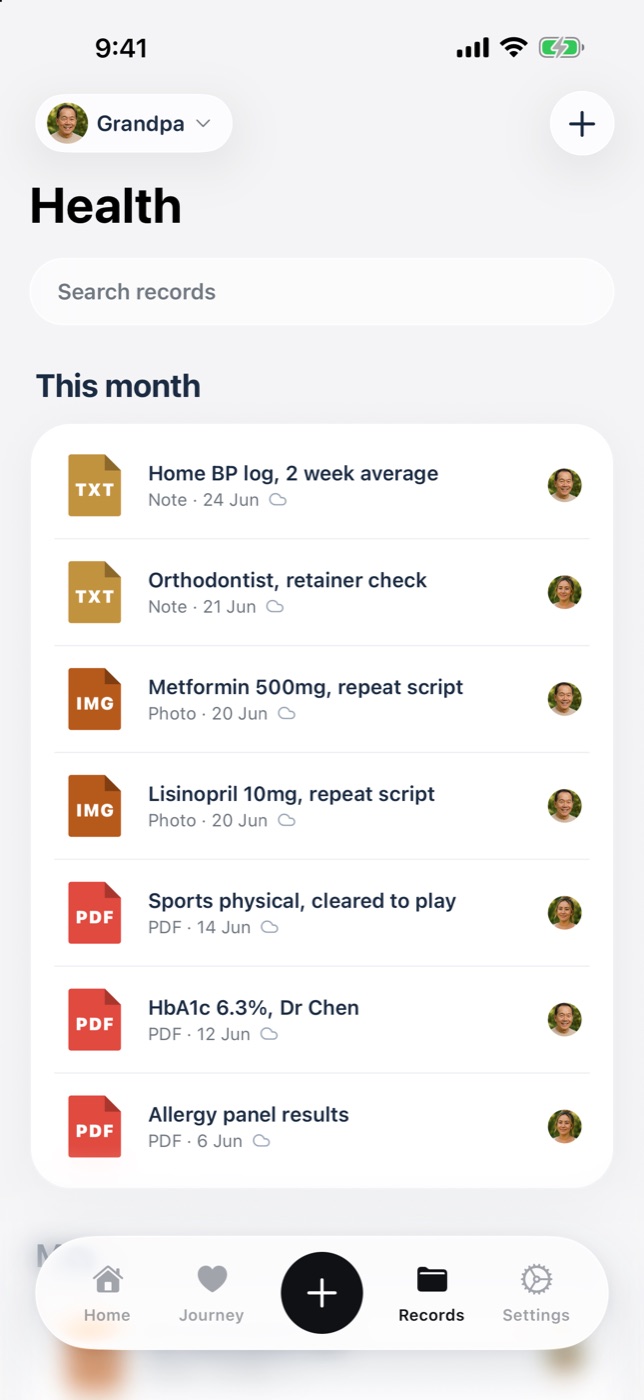
Your parent stays in charge of their own record: they decide which family members see each category, and the person who set up the family sees nothing extra. Lifelong is on iPhone today, with Android coming soon. If your parent would rather not use an app, the FAQ sets out when you can keep records for them. Questions about a condition or a medicine still go to the doctor or the pharmacist.
What comes after the first few weeks?
After the first few weeks the work becomes routine: appointments, one medication list, and keeping everyone told. Our caregiving guide covers how siblings share that, and a separate post covers remembering what the doctor said.
The arrangement you make this month will need revising. NIA's advice is to check in with your parent and the other caregivers regularly, because your parent's needs and everyone's availability change. Put a date on the first check-in.
Sources
- National Institute on Aging: Getting started with caregiving
- National Institute on Aging: Sharing caregiving responsibilities
- National Institute on Aging: Getting your affairs in order checklist
- National Institute on Aging: Advance care planning: advance directives for health care
- US Department of Health and Human Services: HIPAA, family members and friends
- US Department of Health and Human Services: A patient's guide to the HIPAA Privacy Rule (PDF)
- US Department of Health and Human Services: What is the difference between consent and authorization under the HIPAA Privacy Rule?
- US Department of Health and Human Services: HIPAA, personal representatives
- Eldercare Locator, US Administration for Community Living
Lifelong is a health information tool, not medical care. Nothing here is medical advice; for a decision about someone’s health, talk to their doctor. Medical disclaimer.