


Alo, an AI for your family’s health
Alo is the AI assistant in Lifelong, the family health app for iPhone. Alo knows each person in your family, answers from their own records and their own numbers, and tells you when something has changed instead of waiting to be asked. You talk to Alo in the app or from Messages.
Updated
What is Alo?
Alo is an AI that knows your family’s health. You ask it a question in ordinary words, and it answers from what your family keeps in Lifelong: each person’s records, medications, conditions, and the sleep, activity and recovery numbers that come in through Apple Health.
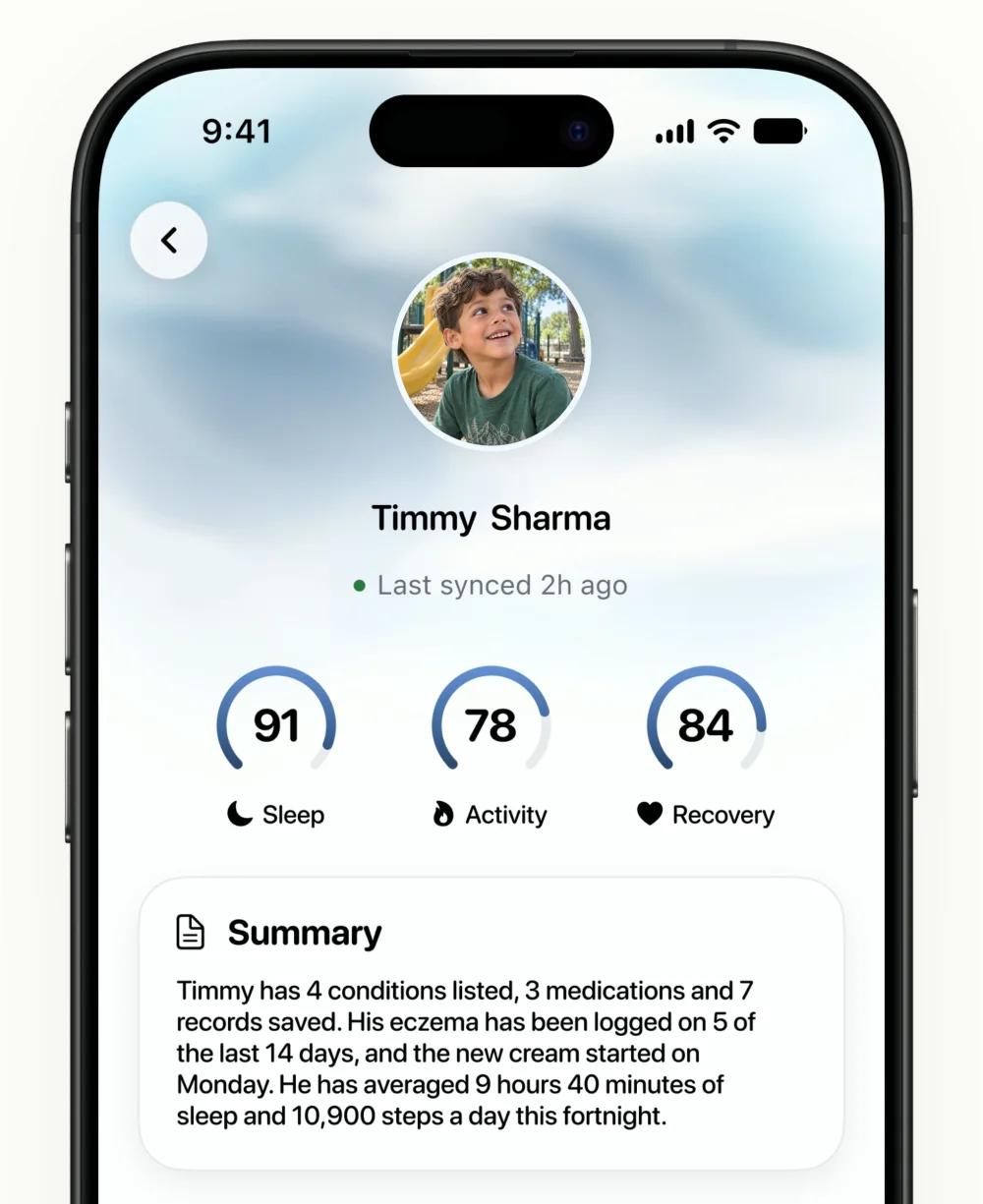
A general chatbot can tell you what eczema is. Alo knows that Timmy started a new cream on Monday, that his eczema has been logged on 5 of the last 14 days, and who his doctor is. So Alo can tell you what changed around the time a flare-up began, and what is worth raising at the next appointment.
What can you ask Alo?
Anything you would otherwise scroll the family chat or dig through a folder for: what has changed in Dad’s results since last year, when Mum started the new tablets, how Grandad slept this week.
- Alo reads the record. Lab values with the lab’s own reference range, conditions, medications, and how one result has moved across several reports. Alo names the document and the date it is quoting, so you can open it yourself.
- Alo reads the numbers. Sleep, activity and recovery scores, steps, resting heart rate and heart rate variability, for up to the last 30 days, set against what is usual for that person.
- Alo keeps the record current. Mention a new symptom or a new medicine and Alo drafts the entry for you to save. Attach a photo or a PDF and Alo offers to file it as a record.
- Alo remembers. It keeps context between conversations, so you do not explain your mother’s knee replacement every time.
Does Alo know my whole family, or only me?
Your whole family. Alo is built around a household, where every person has a profile and chooses what the others can see. Ask Alo about your father’s blood results and it answers from what he has shared with you.
Alo sees exactly what you can see. If your father has shared his medications with you and kept his journal private, Alo answers your questions about his medications and knows nothing of his journal. Each person sets that per category and per person, and can change it at any time.
If you look after someone, Alo checks whether an entry is for you or for them before it drafts anything.
Does Alo tell me things before I ask?
Yes. Lifelong watches the numbers that Alo reads, so a change reaches you without a question. Nobody asks about Grandad’s sleep in the week it starts slipping.
- An alert when a pattern breaks. When someone’s sleep, activity or recovery moves away from their usual, Lifelong raises an alert in the app and says what changed in a sentence.
- A morning report. Once your watch or ring has synced overnight, your report arrives as a notification.
- A summary on the home screen. Each person’s day in a few lines, refreshed as new data comes in. Tap Ask Alo and it explains the summary against your own numbers.
- The family’s week, side by side. Steps and sleep for each person, and a board of weekly averages.
Can Alo update a health record?
Yes, with you. Tell Alo about a new symptom, a new medicine or a document, and Alo drafts the entry. You read it and save it, so the record is always something a person in your family has checked.
Lifelong does not train AI models on your identifiable health data, and you can see your conversations with Alo and delete them. The AI and Alo Disclosure has the detail.
Does Alo replace a doctor or a pharmacist?
No. Alo gets you ready for one. It tells you what your mother is taking and since when, what changed after the last appointment, what the discharge letter said, and which questions are worth bringing to the next visit.
The diagnosis, and any decision to start, stop or change a medicine, stays with the doctor or the pharmacist. The Medical Disclaimer says where that line is.
How is Alo different from ChatGPT Health or Muse?
Alo is built for a family, and general AI assistants are built for one person’s account. ChatGPT Health and Muse from Meta can each read one person’s connected records. Alo holds a profile for every person you look after, with their permission already settled.
Alo also builds a record that lasts. What you tell Alo becomes part of a health record for each person, with the source document behind every answer, and the whole family can use it next month and next year. Introducing Alo has the full comparison.
Where can I use Alo?
In the Lifelong app on iPhone, and from Messages. In the app, Alo is a chat beside your family’s records. In Messages, you can text Alo directly or add it to your family’s group chat, so a question about Dad’s appointment gets answered where the family is already talking.
The same sharing rules apply in both places. The FAQ covers how Alo works in a group chat.
What is coming next for Alo?
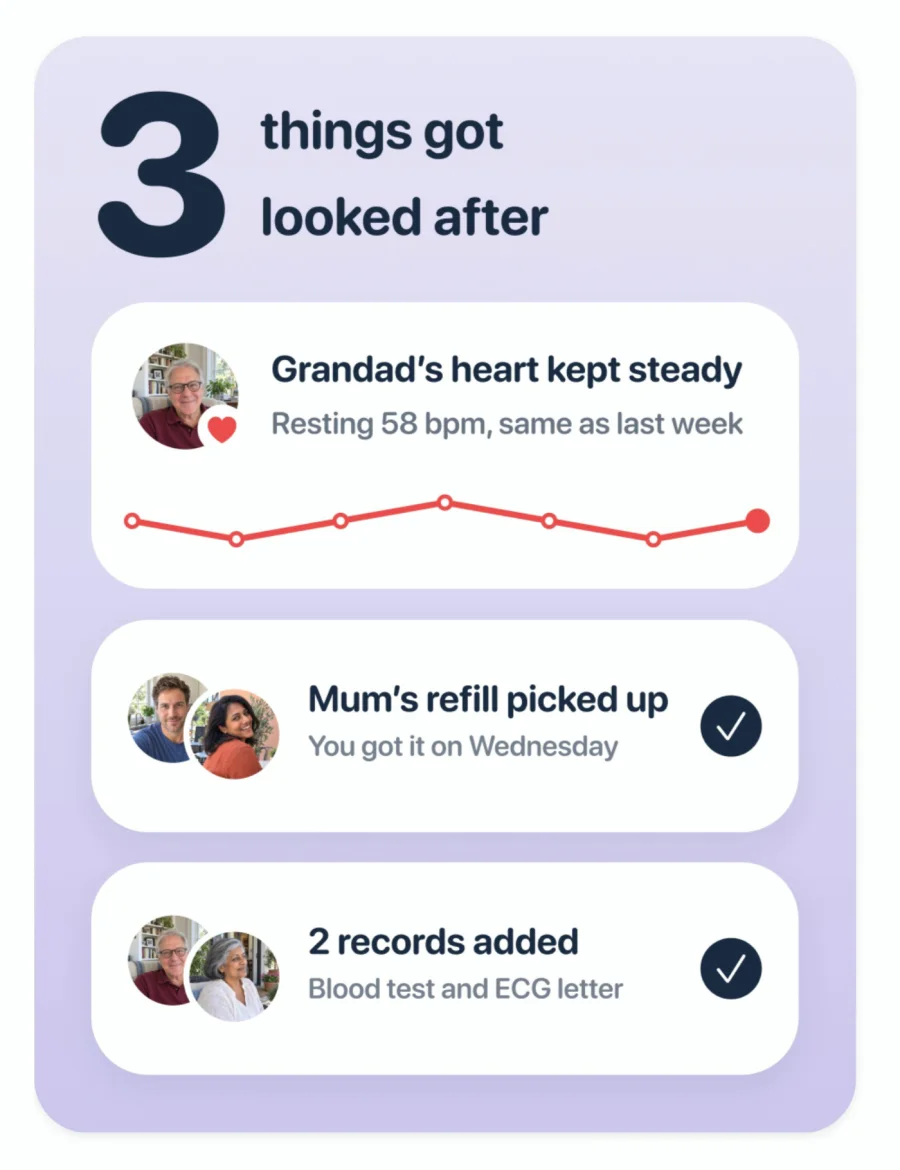
Alo is getting more of the week ahead. On the morning of an appointment, Alo will tell the family it is today, have a summary ready to take to the doctor, and say when to leave. At the end of each week, the family will get one report: how far everyone walked, who slept most consistently, and what got looked after.
More from Lifelong
Lifelong is on the App Store for iPhone.